
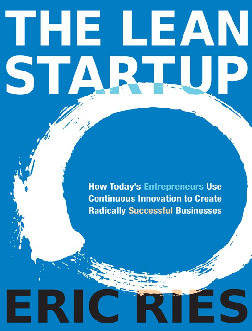

The Lean Startup: How Today’s Entrepreneurs Use Continuous Innovation to Create Radically Successful Businesses by Eric Ries is a revolutionary approach to building startups in today’s fast-paced and uncertain market environment. In this comprehensive guide, Ries introduces the concept of the “Lean Startup,” a methodology designed to help entrepreneurs manage startups efficiently while minimizing risks and resource wastage.
The core idea behind the Lean Startup is to build products that customers actually want, rather than relying on assumptions or guesswork. The book encourages entrepreneurs to create a Minimum Viable Product (MVP)—a basic version of the product that can be tested in the market to gather valuable feedback. This early feedback helps businesses understand what works, what doesn’t, and where improvements are needed, allowing them to iterate and refine their product in a cycle of continuous innovation.
The Lean Startup methodology focuses on three key principles:
Build-Measure-Learn: Entrepreneurs are urged to quickly build a product (MVP), measure how it performs in the real world, and learn from the data to make informed decisions. This iterative process helps reduce the risk of launching a product that does not meet customer needs.
Validated Learning: By testing assumptions and tracking measurable data, startups can validate or invalidate hypotheses about their product and market. This continuous learning process helps identify which ideas and features provide real value and which ones should be discarded.
Innovative Accounting: The book highlights how startups should track their progress using metrics that matter. Instead of relying on traditional methods like vanity metrics (such as sales or web traffic), entrepreneurs should focus on innovation accounting—metrics that help them understand whether they are moving toward a sustainable business model.
Ries also covers important topics such as:
- The importance of pivoting when necessary—shifting business strategies in response to market feedback.
- The concept of Lean Thinking, borrowing from the principles of lean manufacturing to reduce waste and maximize value.
- How to scale effectively by staying agile and adapting to the changing needs of the market.
- The value of entrepreneurial experimentation and how it fosters innovation without large upfront investments.
The book is full of real-world examples and case studies of successful companies that have applied Lean Startup principles, including Dropbox, Zappos, and IMVU. These examples serve as practical models for how entrepreneurs can navigate the uncertainties of building a business, offering valuable lessons for anyone looking to create a sustainable and successful startup.
Overall, The Lean Startup is an essential read for aspiring entrepreneurs and business owners looking to build businesses that thrive in a rapidly changing world. It challenges traditional business practices and provides a fresh, data-driven perspective on how to manage a startup while minimizing risk, maximizing efficiency, and fostering continuous growth.



Reviews
There are no reviews yet.